
Dual Power Spider Crane: Electric & Diesel for Indoor/Outdoor
Dual Power Spider Crane: How One Machine Handles Indoor and Outdoor Lifting
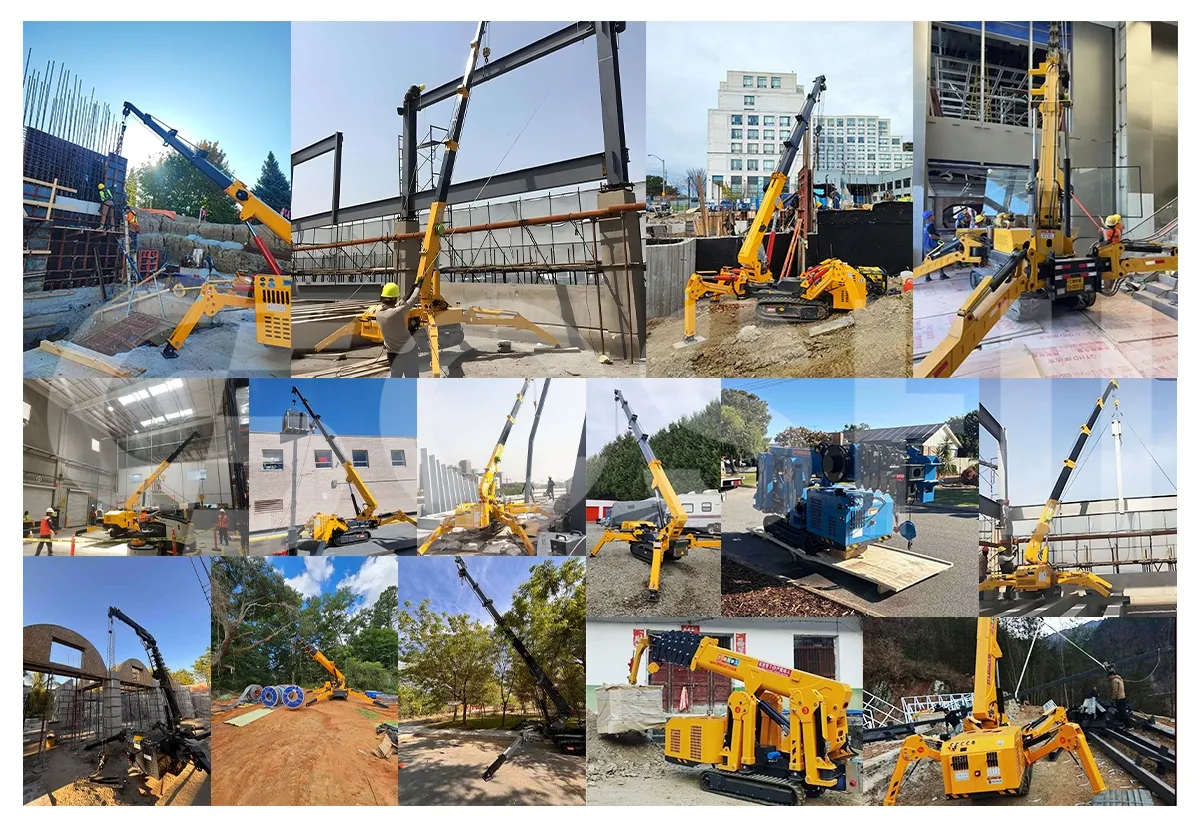
Here's a situation we run into all the time. A contractor starts the morning inside a finished mall, setting glass panels where exhaust fumes aren't allowed. By afternoon, the same machine is outside lifting steel frames where there's no power for miles. A few years ago that meant juggling two cranes. With a dual power spider crane, you just switch how it runs.
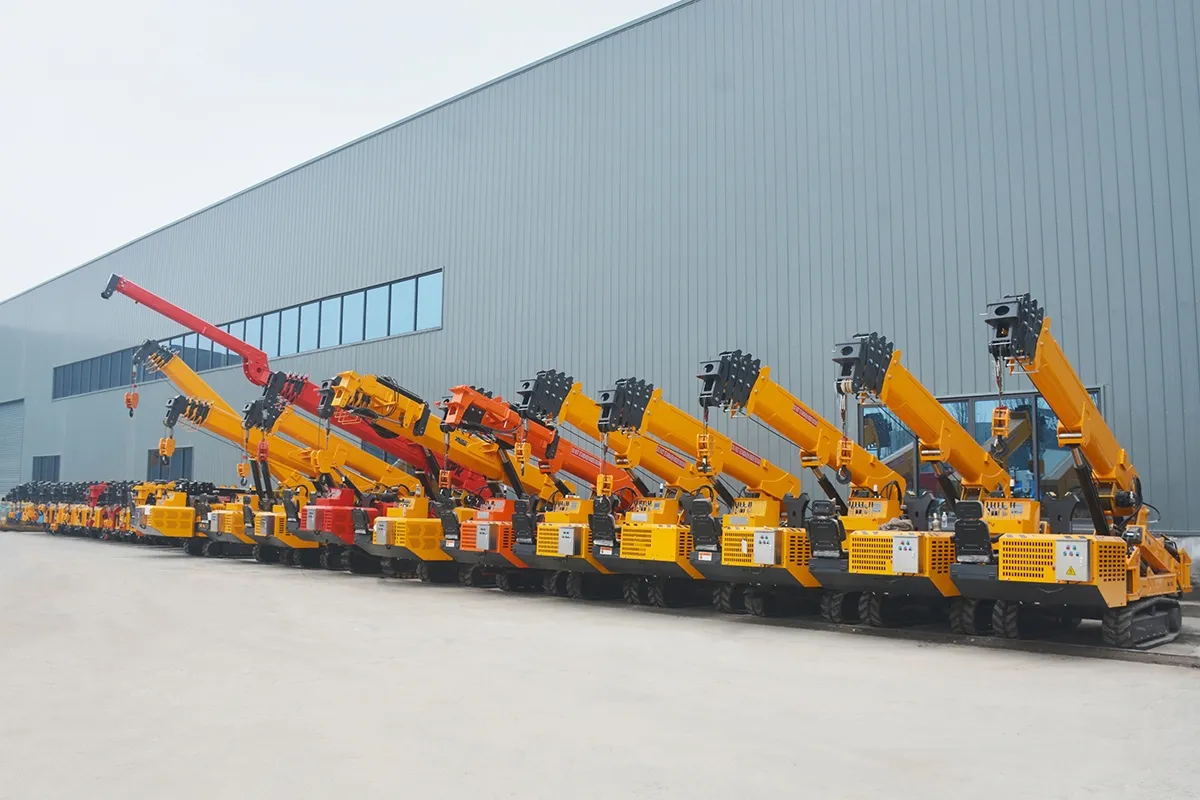
What "Dual Power" Actually Means
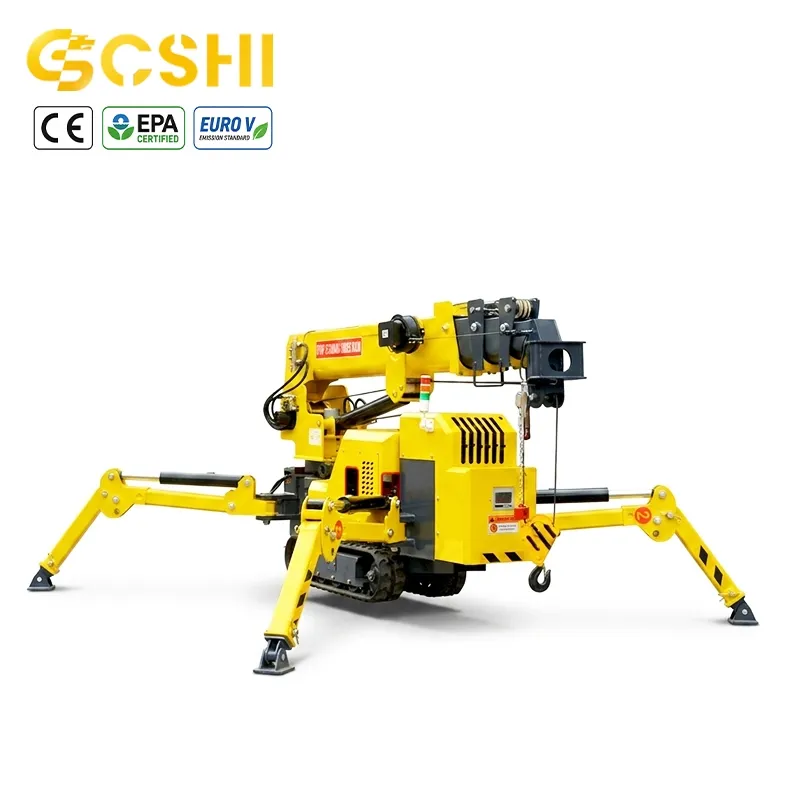
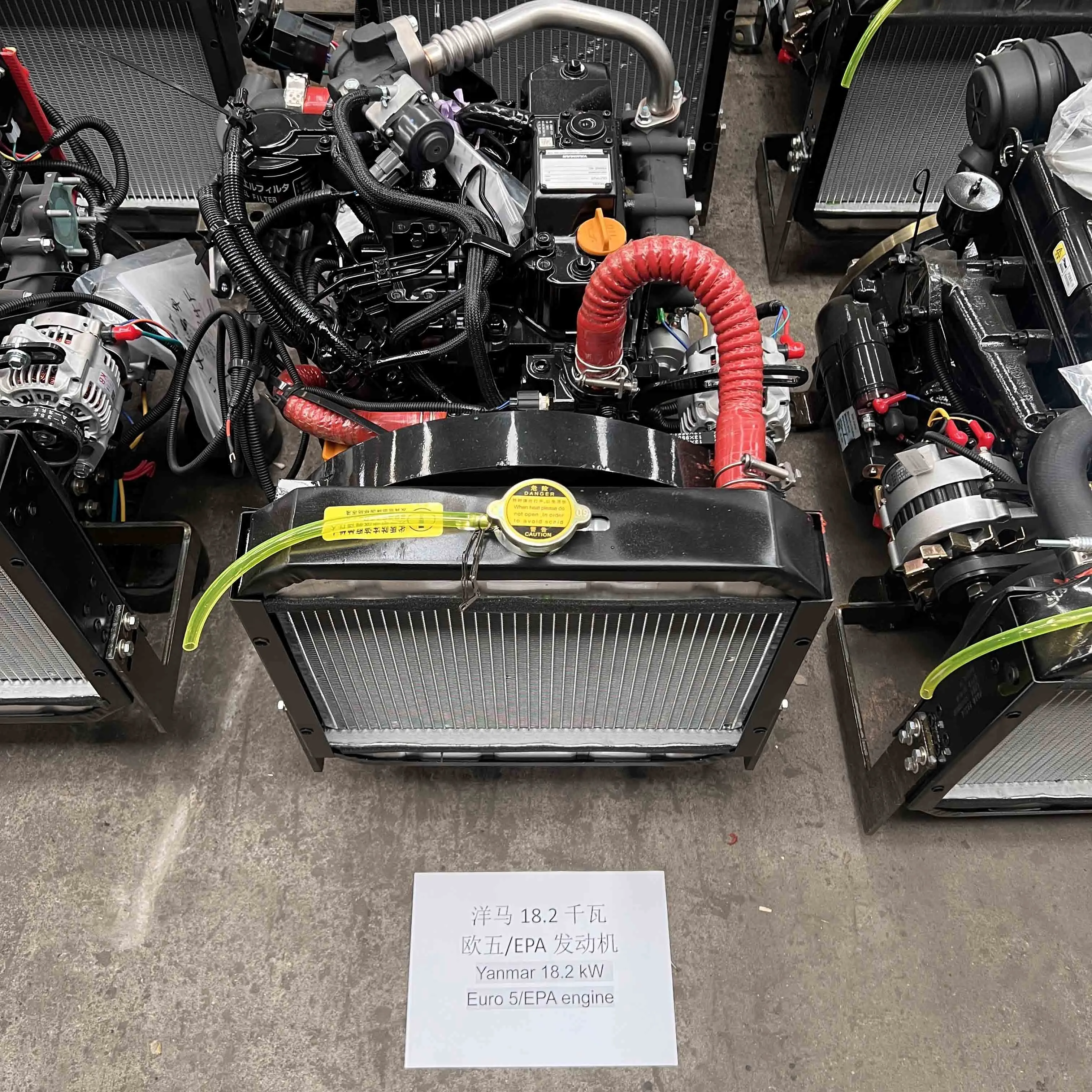
A dual power spider crane carries two drive systems on one tracked chassis: a diesel (or gasoline) engine for outdoor work, and an electric motor running off mains power indoors. On CSHI machines the electric side runs on AC380V three-phase power, while the combustion side can be configured to Euro 5 or EPA standards for your market.
Switching is straightforward. Position the machine, set the outriggers, plug into site supply, shut down the engine, and the whole hydraulic system — boom, winch, slew, tracks — runs on the electric motor. Head outside, unplug, fire up the diesel, and you're self-contained again. Performance stays the same either way, since both drive the same hydraulic pump.
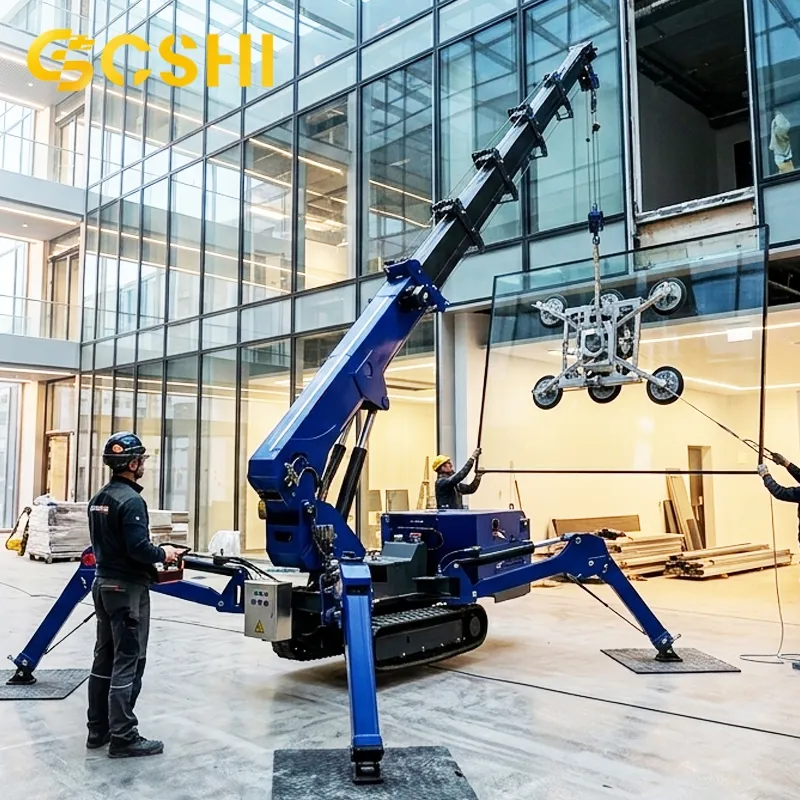
When You Run It on Electric
The electric mode earns its keep anywhere exhaust and noise are problems: glass and curtain wall fitting in occupied buildings, hospital and school renovations, poorly ventilated basements, and food plants or auto factories that ban combustion engines on the floor.
Beyond zero fumes, the electric motor is noticeably quieter. Small CSHI models run around 81.5 dBA at rated speed on the engine, and electric drops that further — a real plus for evening work near occupied spaces, and it makes hand signals and radio calls easier.
When the Diesel Side Takes Over
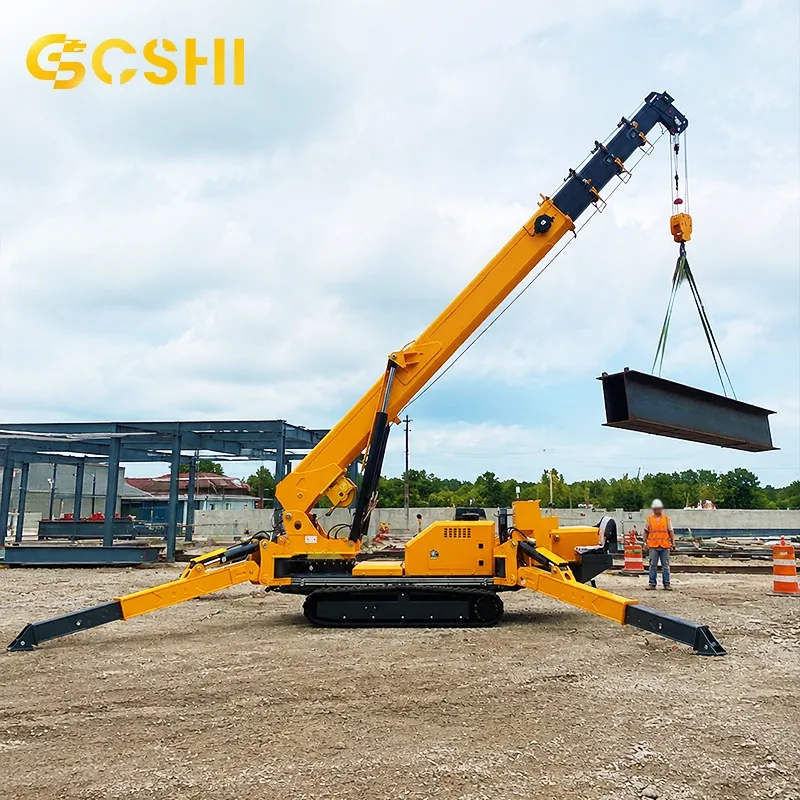
Step outside and diesel becomes the sensible choice. No cable to manage, no dependency on site three-phase supply, and you run all day on a tank.
This is the mode for open construction sites, steel erection, outdoor utility work, landscaping with stone and timber, and disaster-relief jobs where infrastructure may be damaged. The larger CSHI models — from the 4-ton CS-4000 with its 14-metre radius up to the 16-ton CS-16000 reaching 23 metres — are built around diesel for these heavy outdoor cycles. Track travel suits diesel too: hydraulic tracks move at up to 2.5 km/h and climb 25-degree gradients, easier when untethered.
Why One Dual-Power Machine Wins
The obvious benefit is versatility, but the advantages run deeper. You move only one machine between indoor and outdoor phases, cutting setup time and scheduling headaches. Operators stay familiar with one set of controls, one load chart, one maintenance routine. On jobs that straddle the threshold — a glass lift starting outside and finishing through an upper-floor opening — the same crane tracks in, switches power, and finishes without a second rig.
For companies bidding on both indoor fit-out and outdoor structural work, that widens the projects one machine handles.
Matching Tonnage to the Work
Dual power doesn't change the basic rule: size the crane to load, radius, and access width. The 1.2-ton CS-1200, 1.5-ton CS-1500, and 2-ton CS-2000 are the indoor specialists — all fold to roughly 0.7 metres wide and under 1.7 metres tall, rolling through standard doorways and elevators at just 1.3 to 1.8 tons self-weight.
The 3-ton and 4-ton class steps up the radius — the CS-4000 reaches 14 metres — while still fitting reasonably wide access, the sweet spot for curtain wall and heavier installs. At the top, the 10-ton CS-10000 through 16-ton CS-16000 handle serious structural lifts, booms to 21–23 metres with continuous 360-degree slew.
What to Confirm Before Ordering
Because dual power machines are built to order, get these details right up front:
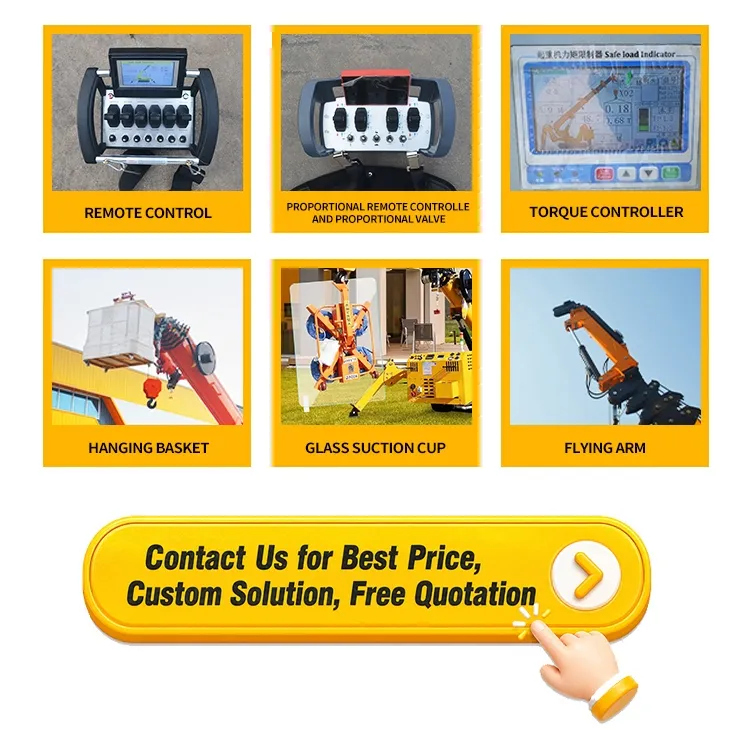
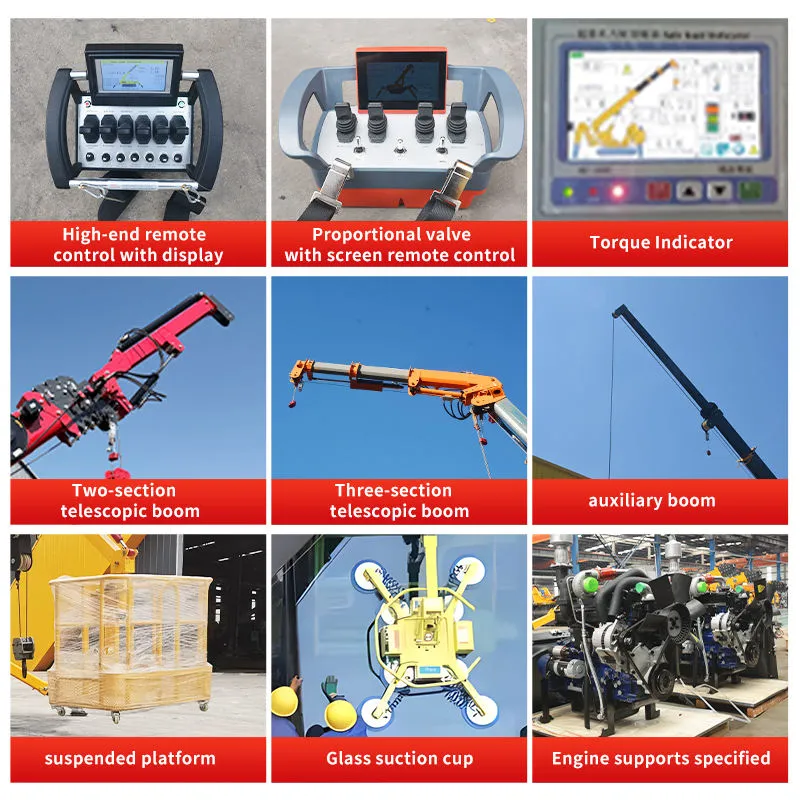
**Voltage and plug.** Confirm the motor matches your local three-phase supply — AC380V is standard, with regional connectors available. **Emission standard.** Specify Euro 5, EPA, or the standard your market requires, documented for customs. **Changeover.** It should be a simple selector operation, not a tool-based conversion. **Access dimensions.** Measure the tightest doorway or elevator against folded width and height, not just capacity. **Attachments** such as wireless remote, load moment indicator, man basket, fly jib, and glass vacuum lifter work on either power source — specify up front.
One Machine, Two Ways to Work
A dual power spider crane doesn't force a choice between clean indoor operation and go-anywhere outdoor strength. You get both on one chassis, same controls and load chart. For contractors whose work moves between finished interiors and open sites, that's hard to beat.
At CSHI we build the full range — from 1.2-ton doorway machines to 16-ton heavy lifters — as dual power units, with engine brand, emission standard, voltage, colour, and attachments configured to your market. Tell us your spaces and loads, and we'll match a model to it.
 Spider Crane for Solar Panel Installation: Rooftop Lifting
 Spider Crane Common Faults & Troubleshooting Guide for M
 How to Choose Spider Crane Optional Attachments (Full Guide)
 How to Lift an HVAC Unit to a Roof with a Spider Crane